 Agubi Men's Health
Prostatitis Isn't One Disease: Why the Type You Have Changes Everything
Prostatitis is actually four different conditions with different causes, different treatments, and different outcomes. Here is what each one looks like.
The word "prostatitis" is doing a lot of work. It sounds like one disease, and it is usually treated like one. But it is actually an umbrella term covering four quite different conditions, each with its own cause, its own typical course, and its own most effective treatment.
Getting the right diagnosis matters more than anything else. A man with acute bacterial prostatitis needs antibiotics urgently. A man with chronic pelvic pain syndrome usually does not benefit from antibiotics at all, and may be harmed by them. The symptoms can look similar from the outside. The biology underneath is not.
This article walks through the four NIH categories, what makes each one different, and what to do if you suspect you have one.
The four NIH categories
In the late 1990s, the National Institutes of Health created a classification now used worldwide. It sorts prostatitis into four categories based on what is happening in the prostate and body, not just on symptoms.
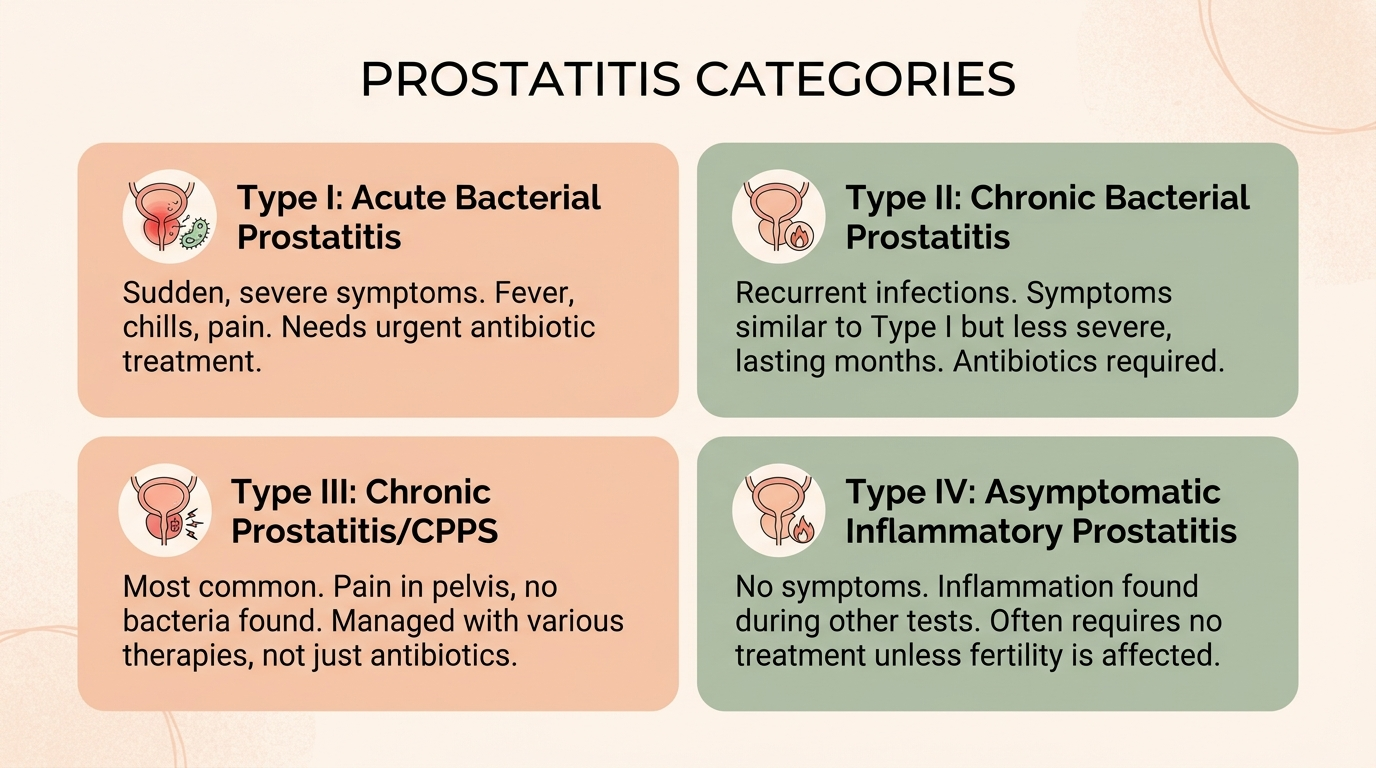
- Category I — Acute bacterial prostatitis. A sudden, severe bacterial infection of the prostate. Uncommon but serious. Symptoms come on fast and hard.
- Category II — Chronic bacterial prostatitis. A recurring or persistent bacterial infection. Less dramatic than Category I but still caused by identifiable bacteria.
- Category III — Chronic prostatitis / chronic pelvic pain syndrome (CPPS). The most common form, accounting for roughly 90 percent of cases. No bacteria are found. Symptoms are real and driven by pelvic floor muscle tension, nerve sensitization, inflammation, and stress.
- Category IV — Asymptomatic inflammatory prostatitis. Inflammation found incidentally during tests for something else. Usually needs no treatment at all.
If you have had symptoms for more than three months, you are almost certainly in Category III, even if a doctor has casually said "prostatitis." That distinction matters, and it shapes everything that follows.
Category I: Acute bacterial prostatitis
This is the one doctors worry about most, because it can become dangerous fast.
What causes it: Common urinary tract bacteria, most often E. coli, that travel up the urethra and infect the prostate. Sometimes it follows a catheter, biopsy, or STI.
How it feels: Severe and sudden. High fever, chills, intense perineal pain, pain during urination, urinary urgency, sometimes inability to urinate.
How it is treated: Prompt antibiotics, usually ciprofloxacin or levofloxacin for 2 to 4 weeks. Severe cases need hospitalization with IV antibiotics. Most men recover fully when treatment starts early.
The trap: Ignoring it. Untreated acute infection can spread to the bloodstream and cause sepsis. Fever plus urinary symptoms plus pelvic pain is a same-day medical issue.
Category II: Chronic bacterial prostatitis
A quieter, more persistent version of the same bacterial story.
What causes it: The same bacteria as Category I, but the infection persists at a lower level. Often a history of recurrent UTIs or previous acute prostatitis.
How it feels: Recurring urinary symptoms and pelvic discomfort, sometimes pain after ejaculation. The course is measured in months or years.
How it is treated: Longer antibiotics, typically 4 to 12 weeks of a fluoroquinolone. Alpha-blockers help urinary symptoms; anti-inflammatories ease pain.
The honest reality: Chronic bacterial prostatitis is uncommon, accounting for only 5 to 10 percent of cases. Many men who think they have it actually have Category III.
Category III: Chronic prostatitis / chronic pelvic pain syndrome (CPPS)
This is what most men mean when they say "I have prostatitis," and it is the most misunderstood.
What causes it: No single cause. CPPS is a syndrome with overlapping drivers:
- Tight, tender pelvic floor muscles, often in spasm
- Nerve sensitization, where the nervous system amplifies normal signals into pain
- Local inflammation or autoimmune activity
- Psychological stress, which both contributes to and is worsened by the symptoms
- Sometimes an old infection that triggered a cascade that never fully turned off
None of these drivers is visible on a standard test, which is part of why men with CPPS often feel dismissed.
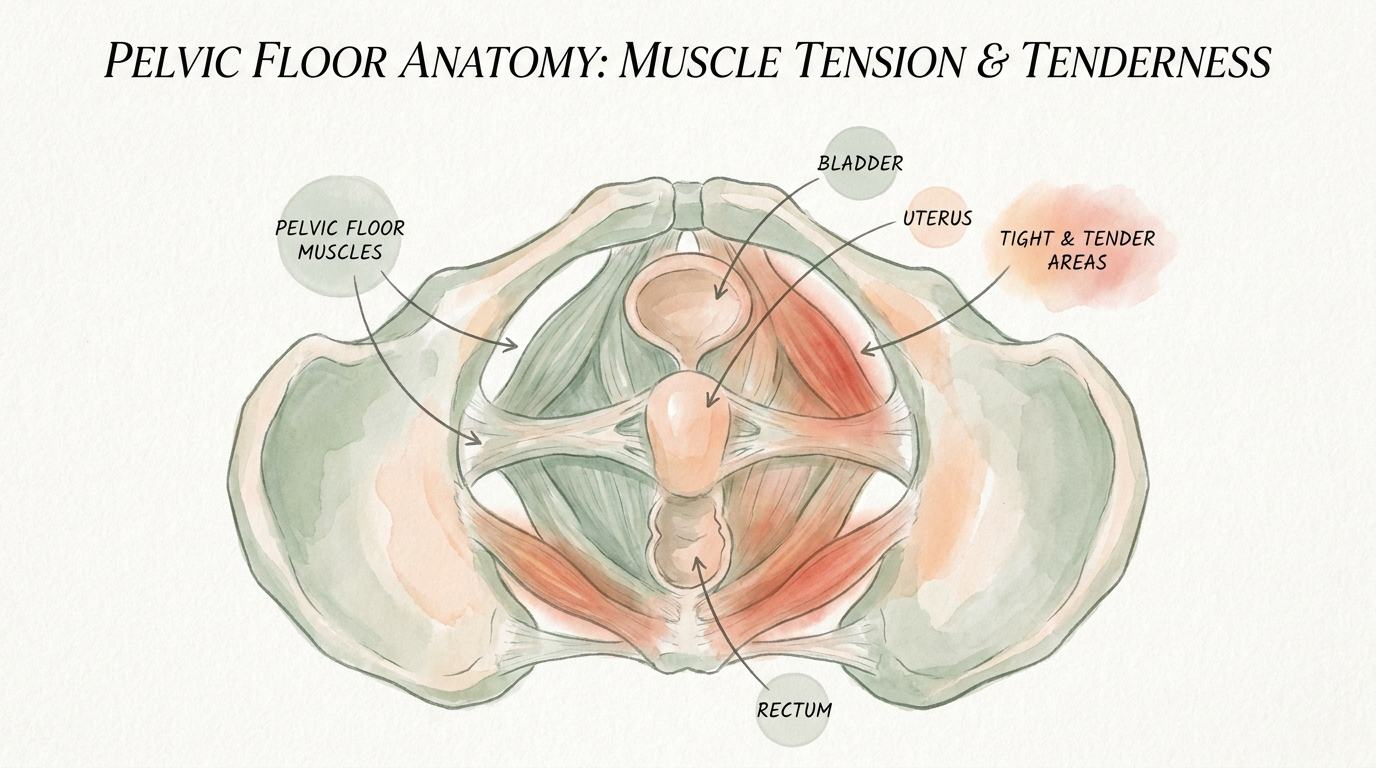
How it feels: Pain or discomfort in the perineum, testes, penis, lower abdomen, or lower back. Urinary frequency, urgency, weak stream, or incomplete emptying. Often worse after long sitting, ejaculation, or stress. The NIH-CPSI is the standard severity questionnaire.
How it is treated: The UPOINT framework classifies each case into six domains — Urinary, Psychosocial, Organ-specific, Infection, Neurologic, Tenderness — and matches treatment accordingly:
- Alpha-blockers for urinary symptoms
- Pelvic floor physical therapy for tender muscles (this is often the single most effective treatment)
- Stress management and sometimes cognitive behavioral therapy
- Anti-inflammatory medications for flares
- Phytotherapy (quercetin, bee pollen) as supportive care
- In stubborn cases, low-energy shockwave therapy or multidisciplinary pain clinics
Roughly 80 percent of men improve with this approach. The recovery timeline is typically 3 to 6 months, longer than expected, but the trajectory is usually toward improvement.
The trap: Repeated antibiotic courses. CPPS is not a bacterial infection. Antibiotics rarely help long-term and may harm gut flora. If you have been on three or more antibiotic cycles without meaningful improvement, the diagnosis may need to be reconsidered.
Category IV: Asymptomatic inflammatory prostatitis
The quietest of the four.
What causes it: Unknown. The prostate shows inflammation on biopsy or in prostatic fluid, but there are no symptoms.
How it feels: Like nothing. That is the point.
How it is treated: Usually no treatment at all. Found incidentally during infertility workups or PSA testing. Treating it does not improve outcomes. Worth knowing about mainly because it can temporarily raise PSA, which can complicate cancer screening.
How to figure out which one you have
A proper diagnosis involves several pieces, not just symptoms.
Step 1: See a doctor. Not all of these can be sorted out at home. A urologist is the right specialist.
Step 2: Standard workup. Expect a urine culture, a digital rectal exam, sometimes a prostatic fluid culture, and PSA testing where appropriate. Imaging is reserved for unclear cases.
Step 3: Track your symptoms honestly. The NIH-CPSI questionnaire gives a baseline number. Repeating it every 4 to 6 weeks shows whether you are actually improving, or just having better weeks.
When to seek care urgently
Some symptoms should never be brushed off.
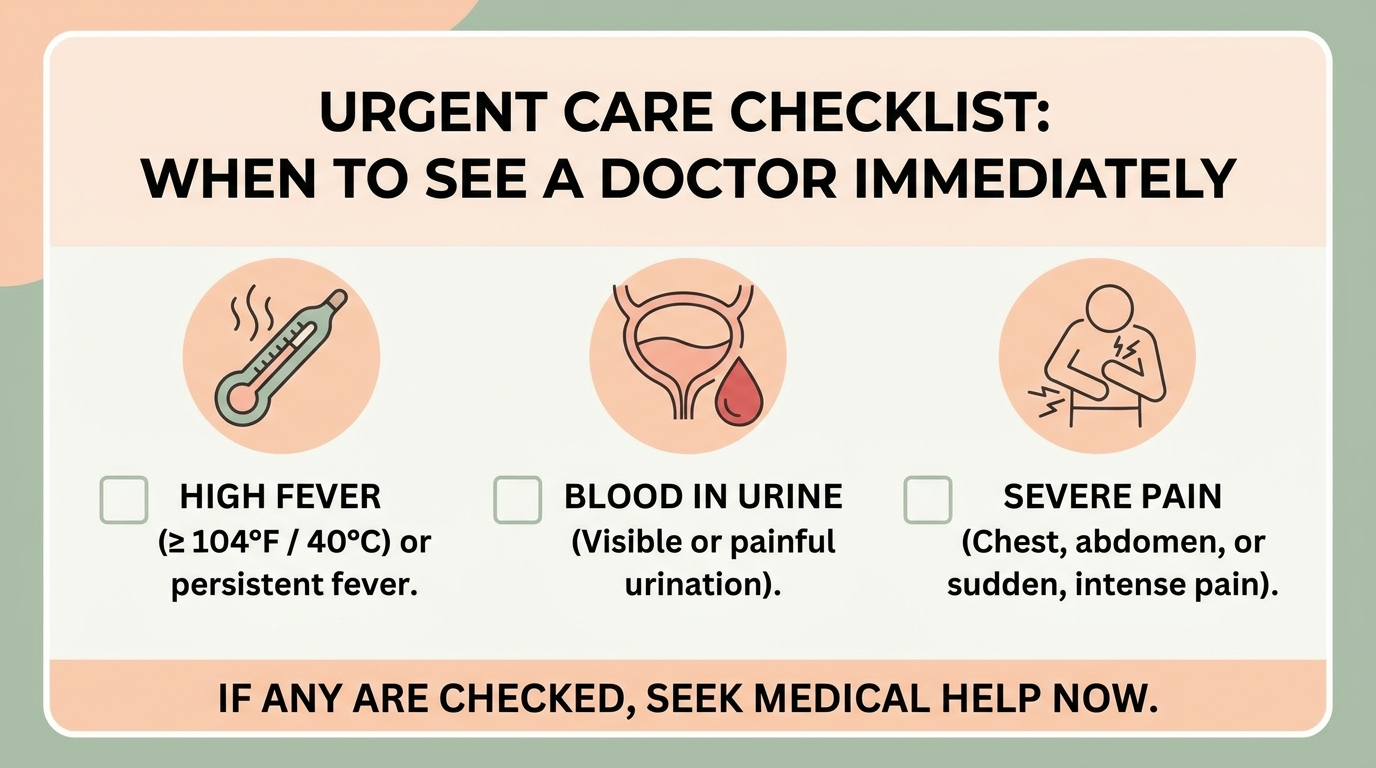
- Fever, chills, or feeling acutely unwell, especially with urinary symptoms
- Inability to urinate at all
- Blood in urine or semen
- Pain that is genuinely worsening week over week
- Severe pelvic or perineal pain that interrupts sleep
These can indicate acute infection, abscess, or another condition entirely. Same-day evaluation is appropriate.
The takeaway
Prostatitis is not one disease. Treating it as one is the most common reason men bounce between antibiotics and unhelpful specialist visits without progress.
The four NIH categories exist because the biology is genuinely different: acute bacterial infection, recurring bacterial infection, the muscle/nerve/stress syndrome (CPPS), or asymptomatic incidental inflammation.
If you have been struggling for months, the most useful question is not "what antibiotic do I try next?" but "is my doctor confident about which category this is?" When the category is right, the treatment usually follows.
References
- Krieger JN et al. NIH consensus definition and classification of prostatitis. JAMA. 1999.
- MedlinePlus (NIH). Prostate Diseases. Updated 2024.
- Mayo Clinic. Prostatitis.
- Cleveland Clinic. Prostatitis.
- 中国慢性前列腺炎诊断治疗指南 (2021 版).
Comments
article.commentNote
Loading…