 Agubi Men's Health
Prostatitis Risk Factors: What Raises Your Odds, and What Doesn't
Infection, pelvic floor tension, stress, and a few habits — not the myths that fill internet forums. Here is what actually drives prostatitis risk according to current evidence.
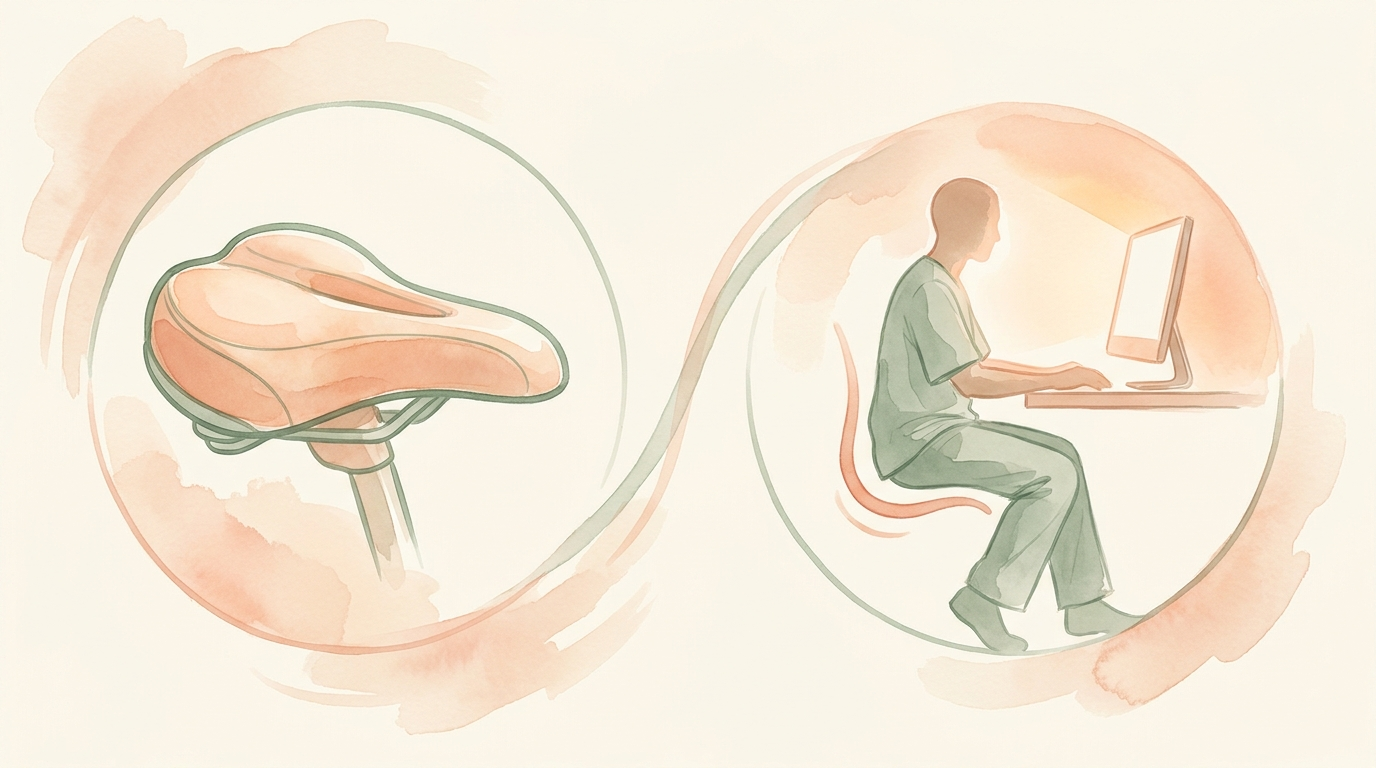
Ask ten men with prostatitis what they think caused it, and you will get ten different answers — most of which are wrong. The internet is full of confident claims about cold seats, spicy food, masturbation frequency, and bike saddles. Most of those are not risk factors. What actually raises your odds depends entirely on which of the four NIH categories of prostatitis you are talking about, since they have different causes.
The four categories, briefly
The NIH classification from 1999 splits prostatitis into:
- Category I — Acute bacterial prostatitis. A genuine urinary tract infection that reaches the prostate. Sudden, dramatic, and rare.
- Category II — Chronic bacterial prostatitis. The same bacterium keeps coming back. Uncommon, accounting for about 5 to 10 percent of prostatitis cases.
- Category III — Chronic prostatitis / chronic pelvic pain syndrome (CP/CPPS). The most common form, accounting for roughly 90 percent. No bacteria are found. Pain, urinary symptoms, and sexual symptoms are real but the cause is not a documented infection.
- Category IV — Asymptomatic inflammatory prostatitis. Found incidentally on biopsy or semen analysis. Not a disease — a finding.
The risk factors for category I and II are about infection. The risk factors for category III are about pelvic floor, nerve, and immune function. Mixing them up is what produces the confusion.
What raises the risk of bacterial prostatitis (Category I and II)
(Category I and II)
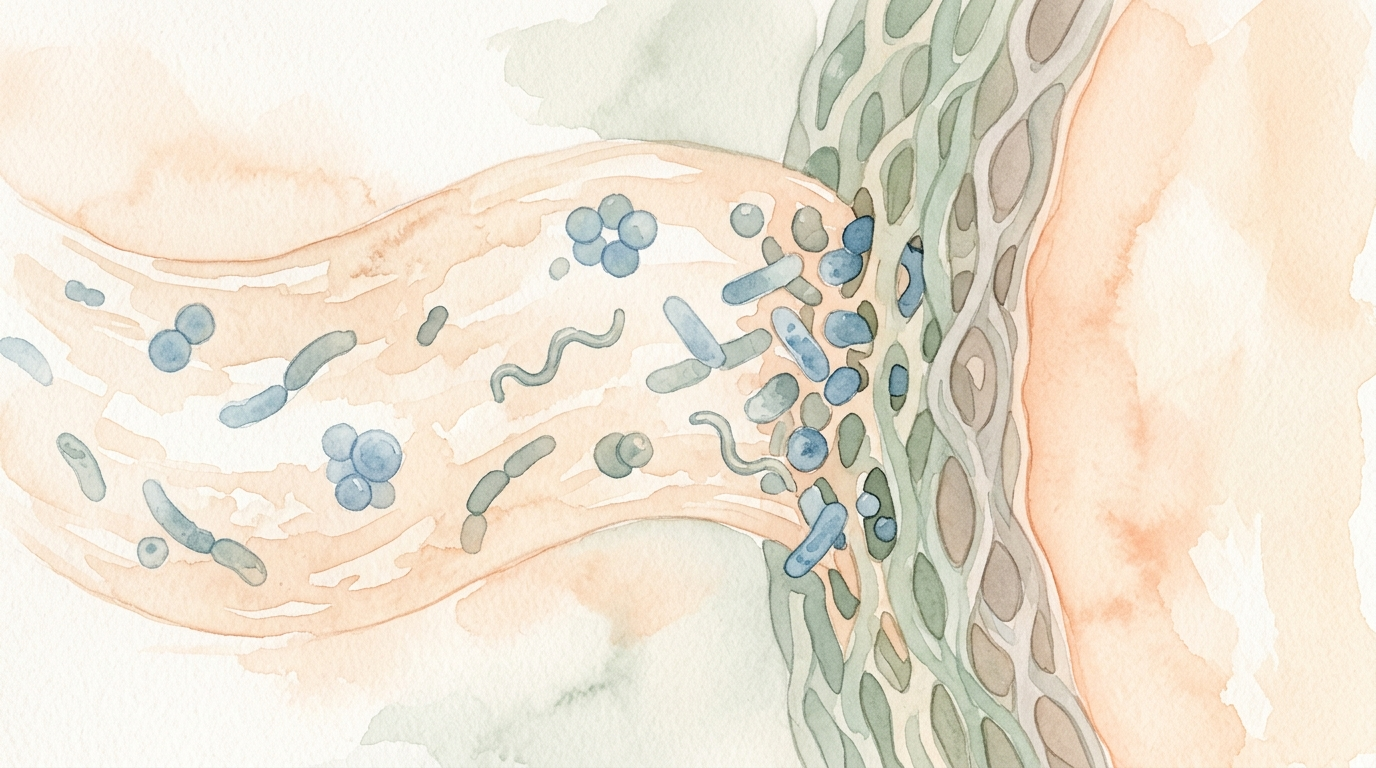
Acute and chronic bacterial prostatitis happen when bacteria reach the prostate, either by ascending the urethra, by reflux of infected urine into the prostatic ducts, or (less often) by spreading through the bloodstream. The things that increase that risk are mostly mechanical or procedural:
- Recent urethral catheterization or instrumentation. Any device crossing the urethra can carry bacteria into the prostate.
- Recent urinary tract infection. The same bacteria may seed the prostate, which is harder to clear than the bladder.
- Unprotected anal intercourse. Associated with urethral colonization by enteric bacteria (especially E. coli) and by STI pathogens.
- STIs, especially Chlamydia trachomatis and Neisseria gonorrhoeae. Can persist in the prostate and trigger chronic infection. Chlamydia is linked to chronic bacterial prostatitis in young men.
- Structural or functional urinary tract problems. Bladder outlet obstruction, urethral stricture, and high-pressure voiding promote urinary reflux into prostatic ducts.
- Diabetes and immune compromise. Poorly controlled diabetes raises bacterial prostatitis rates measurably.
What raises the risk of CP/CPPS (Category III) — the common one
(Category III) — the common one
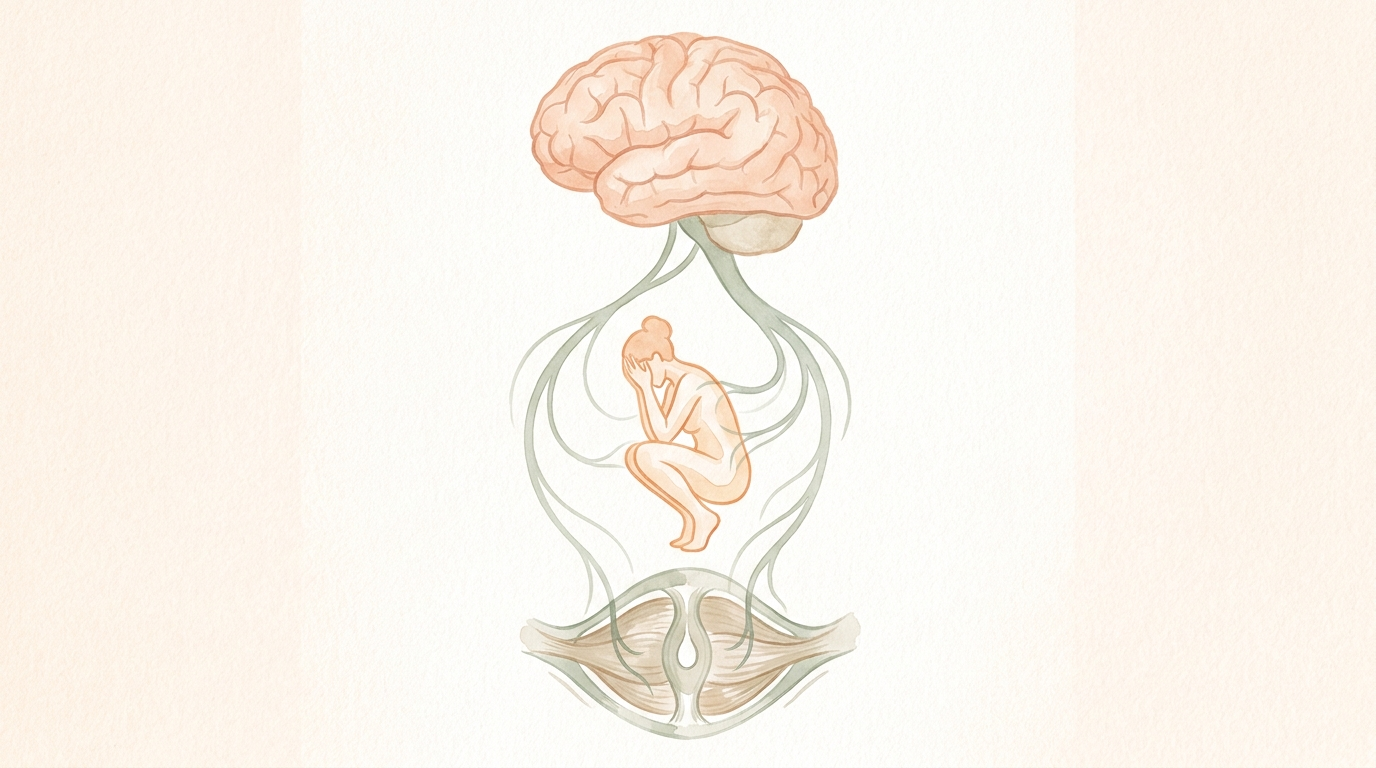
This is the one most men actually mean when they say "I have prostatitis," and it is the one that is genuinely confusing. The risk factors are real, but they operate through mechanisms that have nothing to do with infection.
- Stress and psychological distress. Men with CP/CPPS report significantly higher lifetime rates of anxiety, depression, and stressful life events than controls. Stress amplifies pain signals, tightens pelvic floor muscles, and modulates immune response — all can initiate or worsen CP/CPPS.
- Tense or hypertonic pelvic floor muscles. CP/CPPS is increasingly understood as a pelvic floor dysfunction problem, not an infection problem. Pelvic floor physical therapy is among the most effective treatments, which tells us that muscle state matters. Triggers include chronic sitting, heavy pelvic loading in athletic training, or persistent guarding after an earlier infection.
- Prior UTI or acute prostatitis. Some CP/CPPS cases begin after an infection has cleared — the immune and nervous system changes from the original infection persist.
- Pelvic nerve injury or trauma. Surgery, cycling injury, falls, or chronic mechanical stress can initiate CP/CPPS.
- Other chronic pain conditions. IBS, fibromyalgia, chronic fatigue, migraine, and TMJ disorder all cluster with it. The shared thread is central sensitization — a tendency of the nervous system to amplify normal signals into pain.
- Age. CP/CPPS peaks at 30 to 50 years but can affect men of any age. Population-based studies put prostatitis-like symptom prevalence at 8 to 12 percent of adult men.
What does not meaningfully raise your risk

These are the ones the internet talks about most confidently and the evidence is weakest:
- Cold seats and cold weather. Common in some traditional systems, but no high-quality study links ambient temperature to prostatitis incidence. Cold can worsen existing symptoms but is not a cause.
- Spicy food and alcohol. Both can transiently worsen symptoms in men who already have prostatitis. Neither is a cause — pattern is consistent with symptom flares, not incident disease.
- Masturbation frequency. Ejaculation frequency has not been shown to cause CP/CPPS in rigorous studies. Listen to your own body.
- Long bike rides. Prolonged perineal pressure from saddles can irritate the prostate and worsen existing symptoms. Not shown to initiate CP/CPPS in healthy men but can be a meaningful aggravator. A well-fitted saddle and padded shorts help.
- Sexual activity in general. Active sex life is not a CP/CPPS risk factor and may be protective through regular prostate emptying. STIs are a separate risk factor for bacterial prostatitis (covered above).
- Holding urine. No high-quality study establishes urinary retention habits as an independent cause, though it can worsen existing symptoms.
What to do with this information
If you want to lower your odds of prostatitis, the evidence-backed levers differ by category:
- For bacterial prostatitis: treat UTIs promptly and completely; avoid unnecessary urethral instrumentation; practice safer sex; manage diabetes.
- For CP/CPPS: levers are pelvic floor and nervous system — manage stress with evidence-based approaches; address pelvic floor tension with a trained physical therapist if symptoms develop; treat any preceding infection fully; maintain general physical activity.
For everyone: do not assume a new symptom is prostatitis. The same symptoms can be UTIs, BPH, prostate cancer, or other urological conditions. Diagnosis requires a proper evaluation, not self-categorization from a forum thread.
This article is informational and is not a substitute for medical advice. For evaluation of any persistent urinary or pelvic symptom, please see a qualified clinician.
References
- Krieger JN, Nyberg L Jr, Nickel JC. "NIH consensus definition and classification of prostatitis." JAMA 1999;282(3):236–237.
- Nickel JC, Downey J, Hunter D, Clark J. "Prevalence of prostatitis-like symptoms in a population based study using the NIH-Chronic Prostatitis Symptom Index (NIH-CPSI)." J Urol 2001;165(3):842–845.
- Cai T, et al. "Chlamydia trachomatis versus common uropathogens as a cause of chronic prostatitis." Andrologia 2017.
- Krieger JN, et al. "Risk factors and presentations of chronic prostatitis/chronic pelvic pain syndrome." Int J Antimicrob Agents 2008;31(Suppl 1):S30–S35.
- Pontari M, et al. "Definition and epidemiology of chronic prostatitis/chronic pelvic pain syndrome." In: Chronic Prostatitis / Chronic Pelvic Pain Syndrome, 2020.
- Nickel JC. "Category III Chronic Prostatitis/Chronic Pelvic Pain Syndrome: Insights from the NIH Cohort Study." Urology 2008.
- Schaeffer AJ. "Epidemiology and evaluation of chronic pelvic pain syndrome." Urology 2008.
- Cai T, et al. "Clinical and microbiological characteristics of chronic prostatitis." Andrologia 2017.
- Urology Journal. "Chronic Prostatitis and Chronic Pelvic Pain Syndrome: Unraveling One of Urology's Most Complex Conditions." Urol J 2024.
Comments
article.commentNote
Loading…