 Agubi Men's Health
Prostate Symptoms: A Practical Guide to What You're Feeling
Prostatitis, BPH, prostate cancer, stones, and cysts cause overlapping symptoms. Here is a clear, evidence-based guide to what each one actually feels like — and when it warrants a doctor visit.
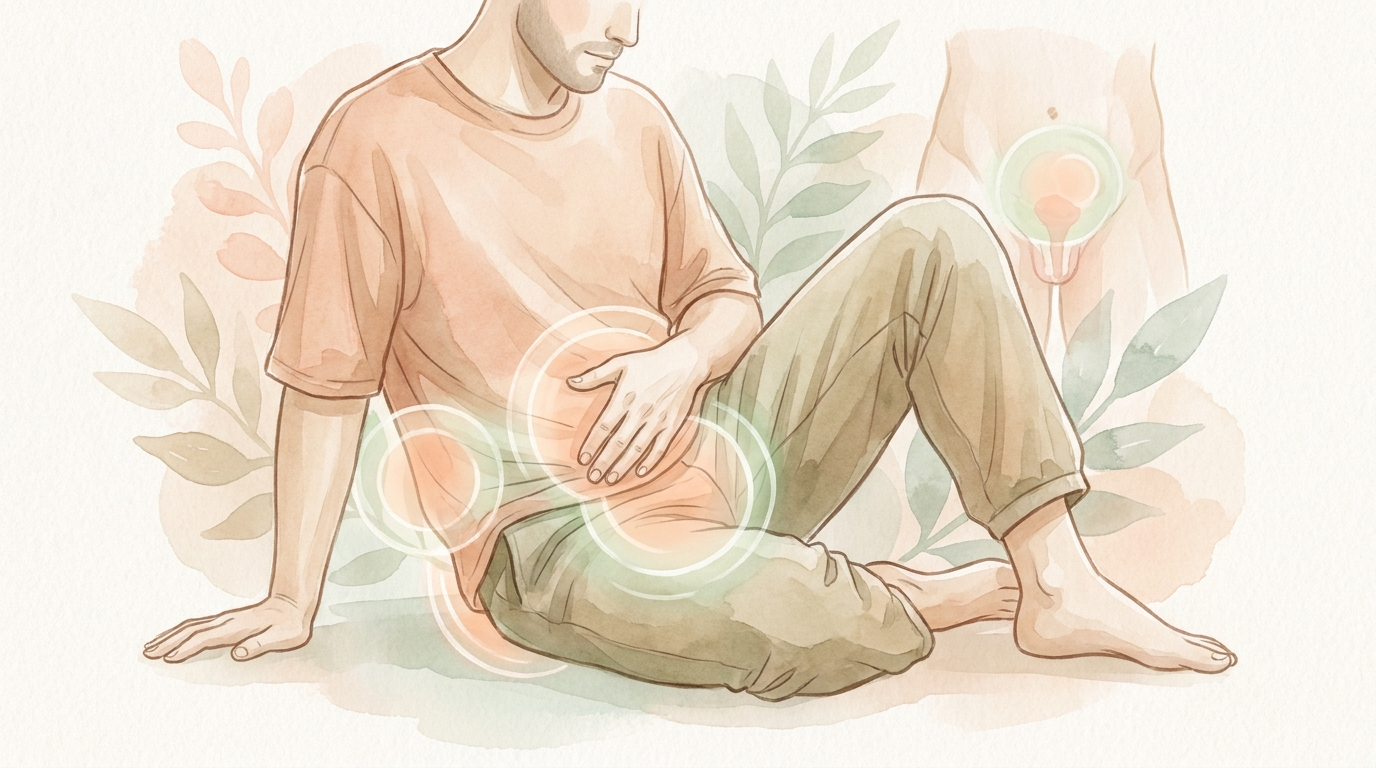
Prostate problems feel surprisingly similar to one another. The same dull ache in the perineum, the same weak stream, the same nighttime bathroom trips. That overlap is exactly why symptoms are confusing — and exactly why looking at them in isolation rarely tells you what is actually wrong.
This guide does not replace a urologist. Its job is narrower: to help you describe what you feel, understand which condition that pattern points toward, and know when the symptoms you are noticing warrant a prompt visit.
The three buckets of prostate symptoms
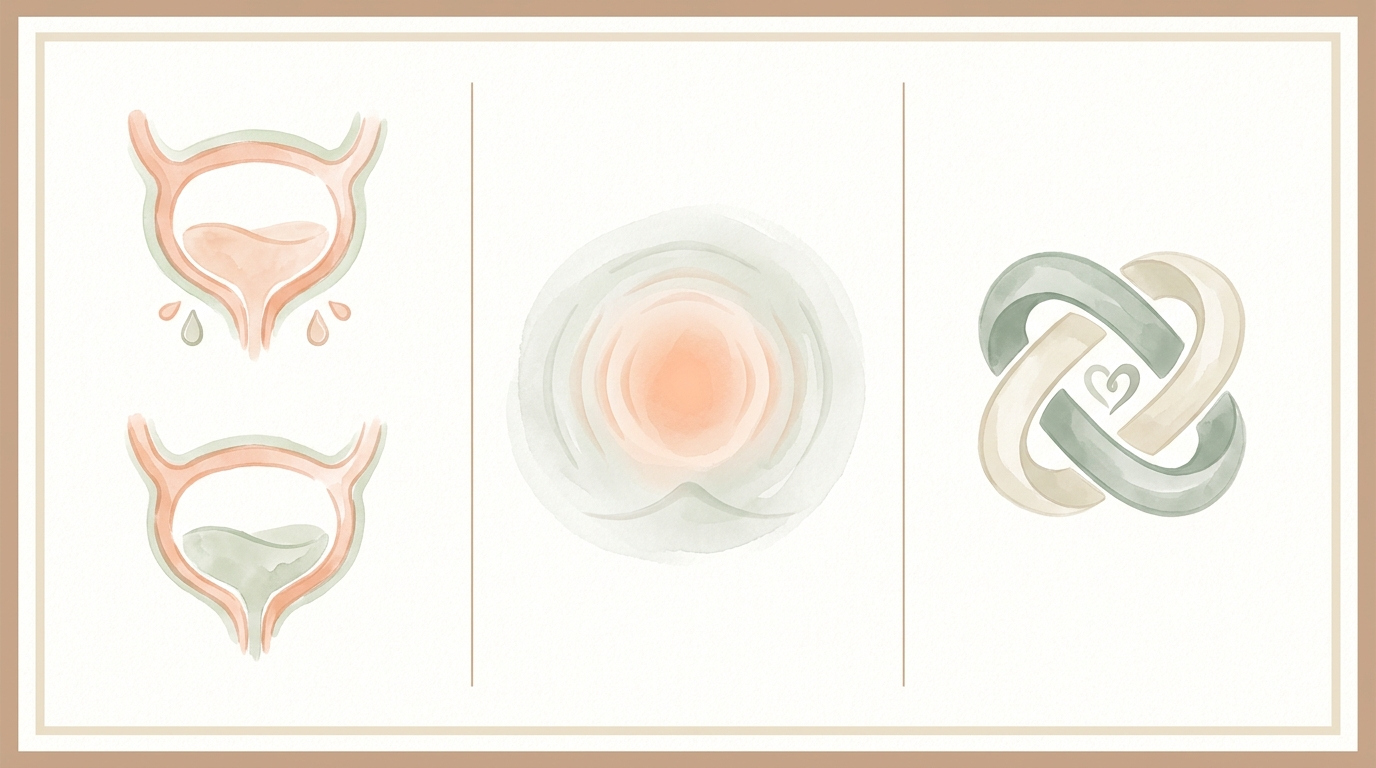
Almost every prostate symptom falls into one of three groups:
- Urinary symptoms. Frequency, urgency, weak stream, hesitancy, nocturia, incomplete emptying, post-void dribble.
- Pain symptoms. Perineum, testicles, tip of the penis, lower back, suprapubic area, pain during or after ejaculation.
- Sexual symptoms. Erectile changes, painful ejaculation, reduced libido, blood in semen.
Each of the five common prostate conditions leans into one bucket more than the others — but none of them stays neatly inside its lane.
What the symptoms look like, side by side
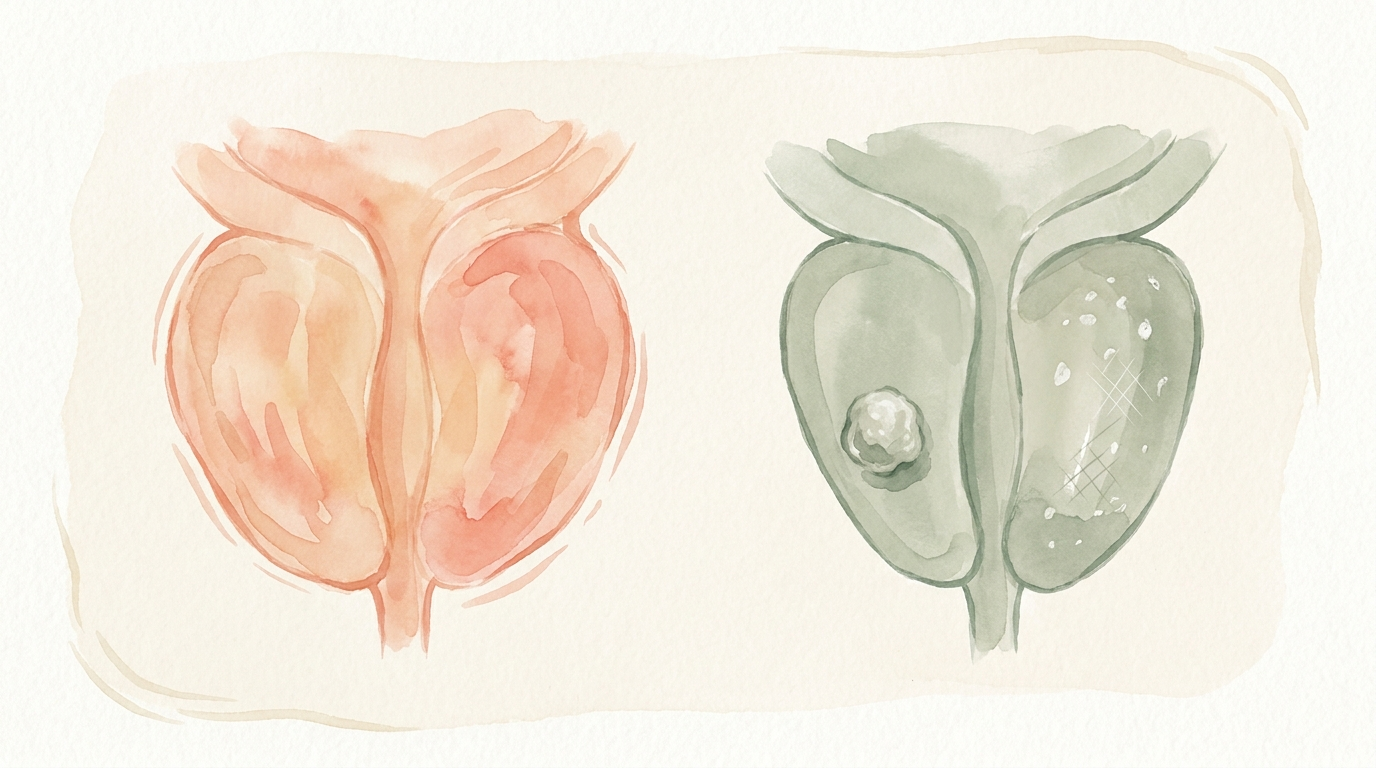
The table below summarizes the most common symptom pattern for each condition. It is intentionally simplified — there is no single symptom that confirms or rules out any of them.
| Condition | Typical age | Dominant symptom pattern | Hallmark clues |
|---|---|---|---|
| Prostatitis (Category III / CPPS) | 20s–50s | Perineal pain, painful ejaculation, urinary urgency | Pain is the lead symptom; no fever; often flaring with stress or sitting |
| Prostatitis (acute bacterial) | Any adult | Sudden fever, severe perineal pain, urinary retention | Acute onset, looks like an infection; needs urgent care |
| BPH (enlarged prostate) | 50+ | Weak stream, hesitancy, nocturia, incomplete emptying | Painless; gradual progression over years |
| Prostate cancer | 50+ (rare under 40) | Often no symptoms early; advanced: bone pain, weight loss | Most early cancers are silent; PSA and DRE are the screening tools |
| Prostate stones | 40+ | Often none; sometimes perineal pain or blood in semen | Typically found incidentally on ultrasound |
| Prostate cysts | Any age | Often none; large cysts: pelvic pain, blood in semen, urinary symptoms | Also typically found incidentally on imaging |
A few patterns worth pulling out:
Pain is the single most useful differentiator. Prostatitis — particularly the chronic, non-bacterial form (Category III, also called CPPS) — is painful. BPH, prostate cancer, stones, and cysts usually are not. If your dominant complaint is pain, prostatitis is the leading candidate. If your dominant complaint is how the urine flows, BPH leads.
Nocturia alone is not specific. Getting up once or twice a night can be habit, fluid intake, sleep quality, age-related hormone changes, or BPH. It is a symptom worth mentioning, but it does not by itself diagnose anything.
"Feels like a UTI but the culture is negative" is a classic prostatitis pattern — especially in younger men. The bladder feels irritated, urine tests are clean, and antibiotics do not fully resolve it. That mismatch is a strong clue that the prostate, not the bladder, is the source.
The two symptom checklists worth knowing
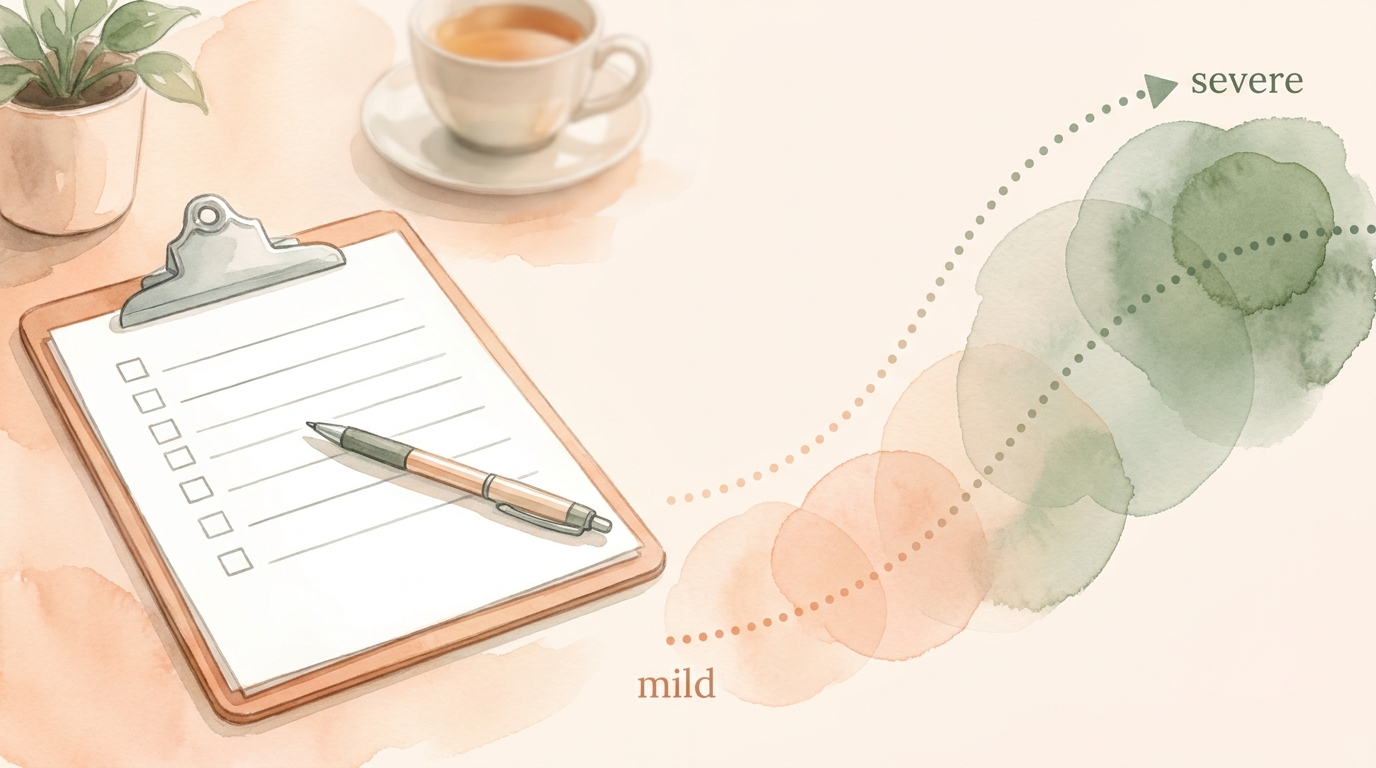
If you want to put a number on what you feel, two validated tools exist. They are not diagnostic, but they help you describe severity consistently at follow-up visits.
NIH-CPSI (Chronic Prostatitis Symptom Index). A 9-item questionnaire designed for prostatitis. It scores pain (0–21), urinary symptoms (0–10), and quality-of-life impact (0–12). A total below 8 is mild; 15–29 is moderate; 30 or above is severe. A change of 6 points is considered clinically meaningful.
IPSS (International Prostate Symptom Score). A 7-item questionnaire designed for BPH. It classifies lower urinary tract symptoms as mild (0–7), moderate (8–19), or severe (20–35). One additional quality-of-life question rates how the patient feels about living with the symptoms.
Neither score replaces imaging, examination, or laboratory work — but bringing a completed score to your appointment gives the urologist a concrete starting point and a way to track whether treatment is helping.
Red flags that mean see a doctor soon
Some symptoms should not wait for a routine appointment:
- Fever with pelvic pain or urinary symptoms. This combination suggests acute bacterial prostatitis or a prostate abscess. Both can progress to sepsis and require prompt antibiotics.
- Visible blood in the urine or semen that is new and persistent. It does not always mean cancer — infections and stones cause it too — but it does mean a workup is warranted.
- Sudden inability to urinate (acute urinary retention). This is a medical emergency. The bladder becomes painfully full and the kidneys can be affected. Catheterization is usually needed.
- Unexplained bone pain, especially in the hips, lower back, or pelvis, combined with weight loss or fatigue. In a man over 50 with elevated PSA, this pattern raises concern for metastatic prostate cancer.
- A hard, irregular nodule felt during self-examination — or any new lump you have noticed. A digital rectal exam by a clinician is the next step.
What to do with this information
Symptoms are signals, not diagnoses. The most useful thing you can do between now and a clinical visit is to notice three things and write them down:
- When did the symptoms start, and have they changed? A sudden onset with fever points one way; a slow drift over years points another.
- What makes them worse or better? Sitting, ejaculation, stress, caffeine, time of day — patterns here often differentiate prostatitis from BPH.
- What exactly do you feel, and where? "Hurts to pee" and "burning at the tip of the penis" are different problems. Vague descriptions make it harder for the clinician to land on the right test.
Bring that short note, plus a completed NIH-CPSI or IPSS if you have time, and the appointment will be more productive. Diagnosis almost always comes from the combination of what you describe, what the exam shows, and what the imaging and labs reveal — not from any one symptom alone.
This article is informational and is not a substitute for medical advice. If anything above sounds familiar, please see a qualified clinician.
References
- Krieger JN, Nyberg L Jr, Nickel JC. "NIH consensus definition and classification of prostatitis." JAMA 1999;282(3):236–237.
- Litwin MS, McNaughton-Collins M, Fowler FJ Jr, et al. "The National Institutes of Health chronic prostatitis symptom index: development and validation of a new outcome measure." J Urol 1999;162(2):369–375.
- Barry MJ, Fowler FJ Jr, O'Leary MP, et al. "The American Urological Association symptom index for benign prostatic hyperplasia." J Urol 1992;148(5):1549–1557.
- Sandhu JS, Bixler BR, Dahm P, et al. "Management of Lower Urinary Tract Symptoms Attributed to Benign Prostatic Hyperplasia: AUA Guideline Amendment 2024." J Urol 2024;211(1):11–19.
- Nickel JC, Downey J, Hunter D, Clark J. "Prevalence of prostatitis-like symptoms in a population based study using the NIH-Chronic Prostatitis Symptom Index (NIH-CPSI)." J Urol 2001;165(3):842–845.
- Han C, Kang N, Liu H, et al. "Differential diagnosis of uncommon prostate diseases." Front Oncol 2021;11:643456.
- Hyun JS. "Clinical significance of prostatic calculi: a review." World J Mens Health 2017;35(2):75–81.
- Qiu Y, et al. "Prostatic cyst in general practice: a case report and literature review." Front Surg 2018;5:51.
- Prostate Cancer UK. "Prostate cancer signs and symptoms." https://prostatecanceruk.org/prostate-information-and-support/risk-and-symptoms/prostate-cancer-signs-and-symptoms (accessed 2026).
- National Cancer Institute. "Understanding Prostate Changes and Conditions." https://www.cancer.gov/types/prostate/understanding-prostate-changes (accessed 2026).
Comments
article.commentNote
Loading…